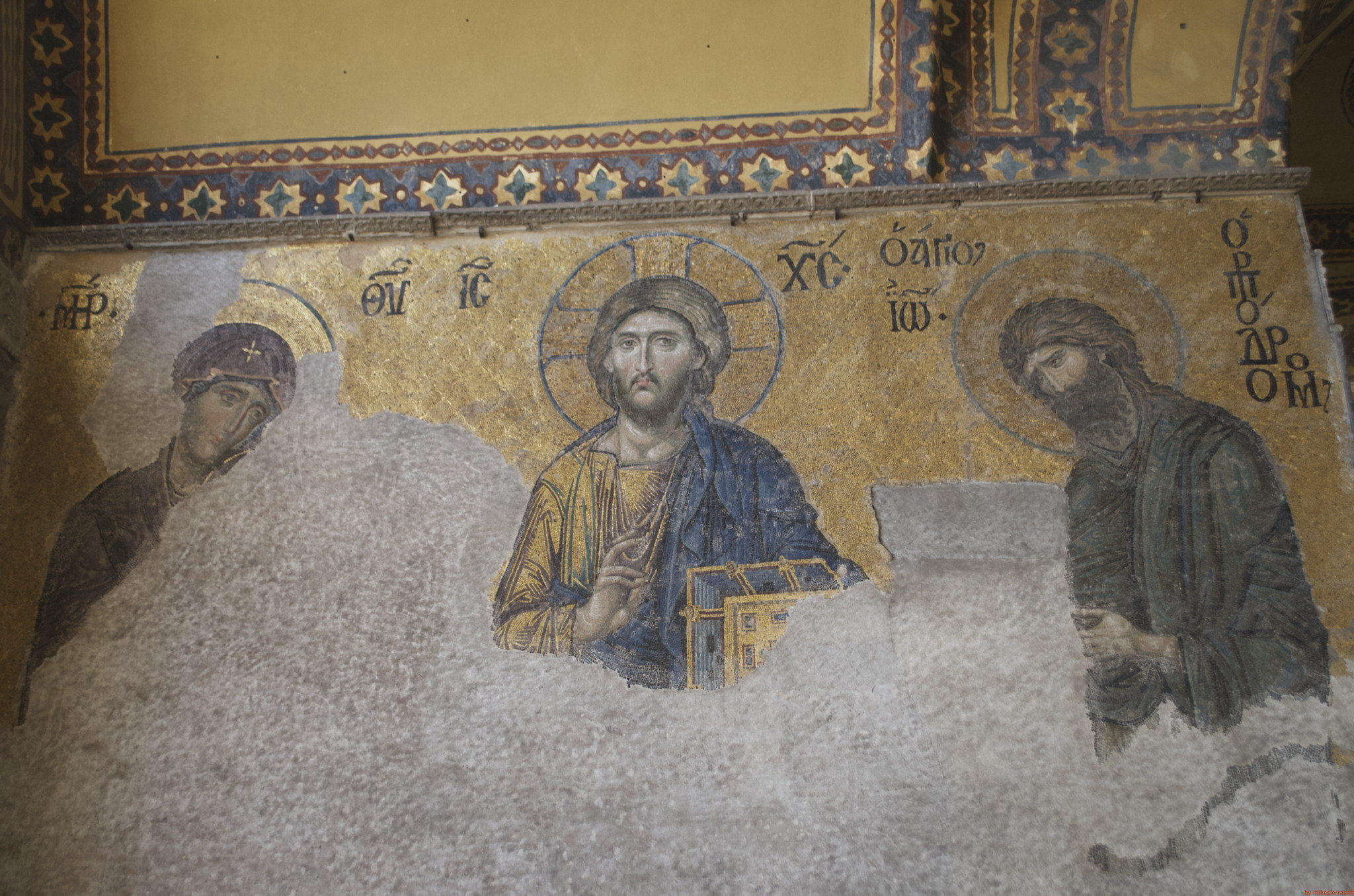
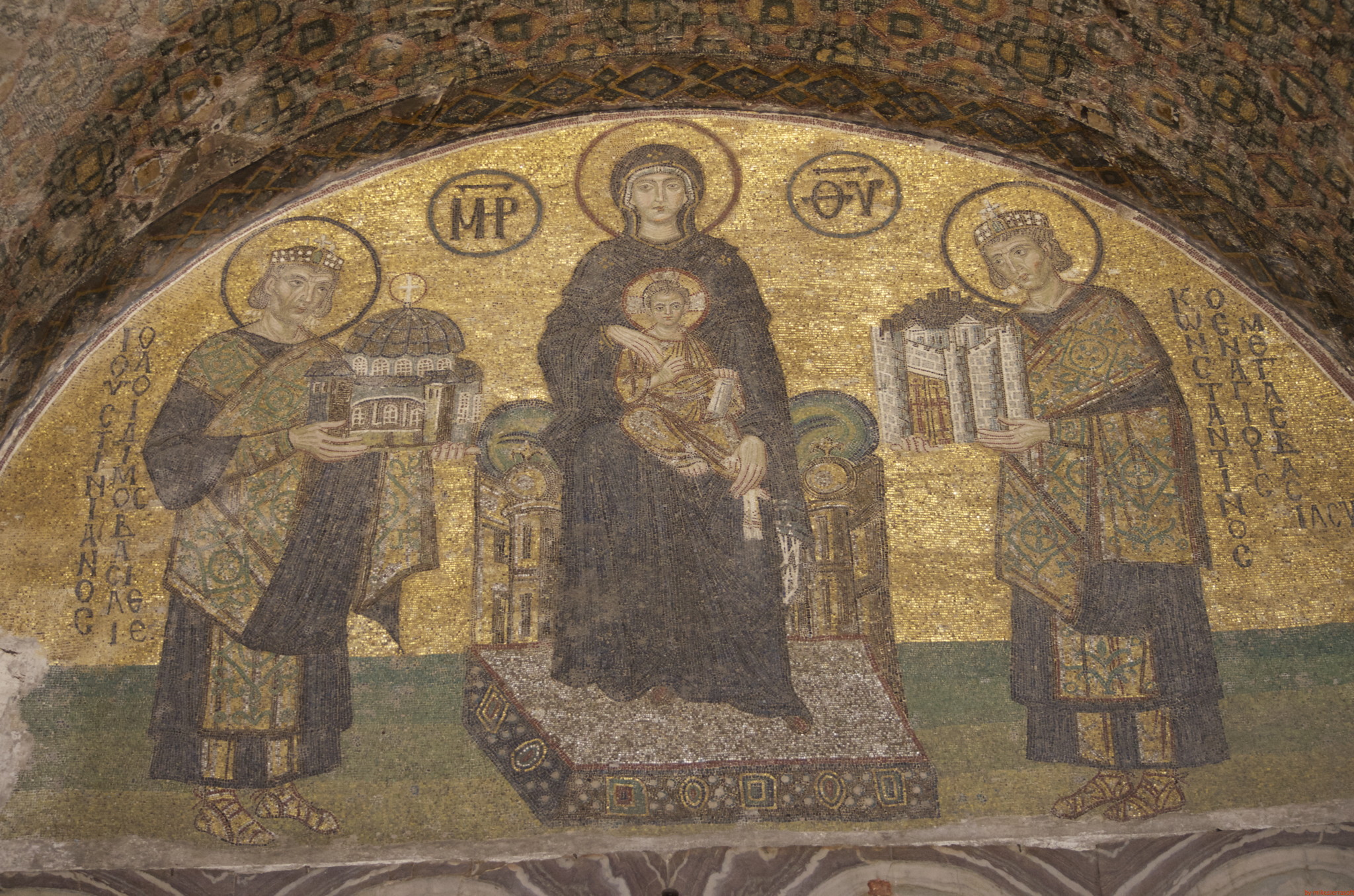
Its gigantic proportions make it one of the key architectural monuments of all time. The basilica has a plant that combines the rectangle within the square ( 71×77 m), with three naves, arches dividing into two rows, and a single apse opposite the entrance, and outside shows polygonal. The interiors are embellished with mosaics, precious marble and stucco: columns expensive porphyry or green marble from Thessaly are embellished with finely carved capitals.
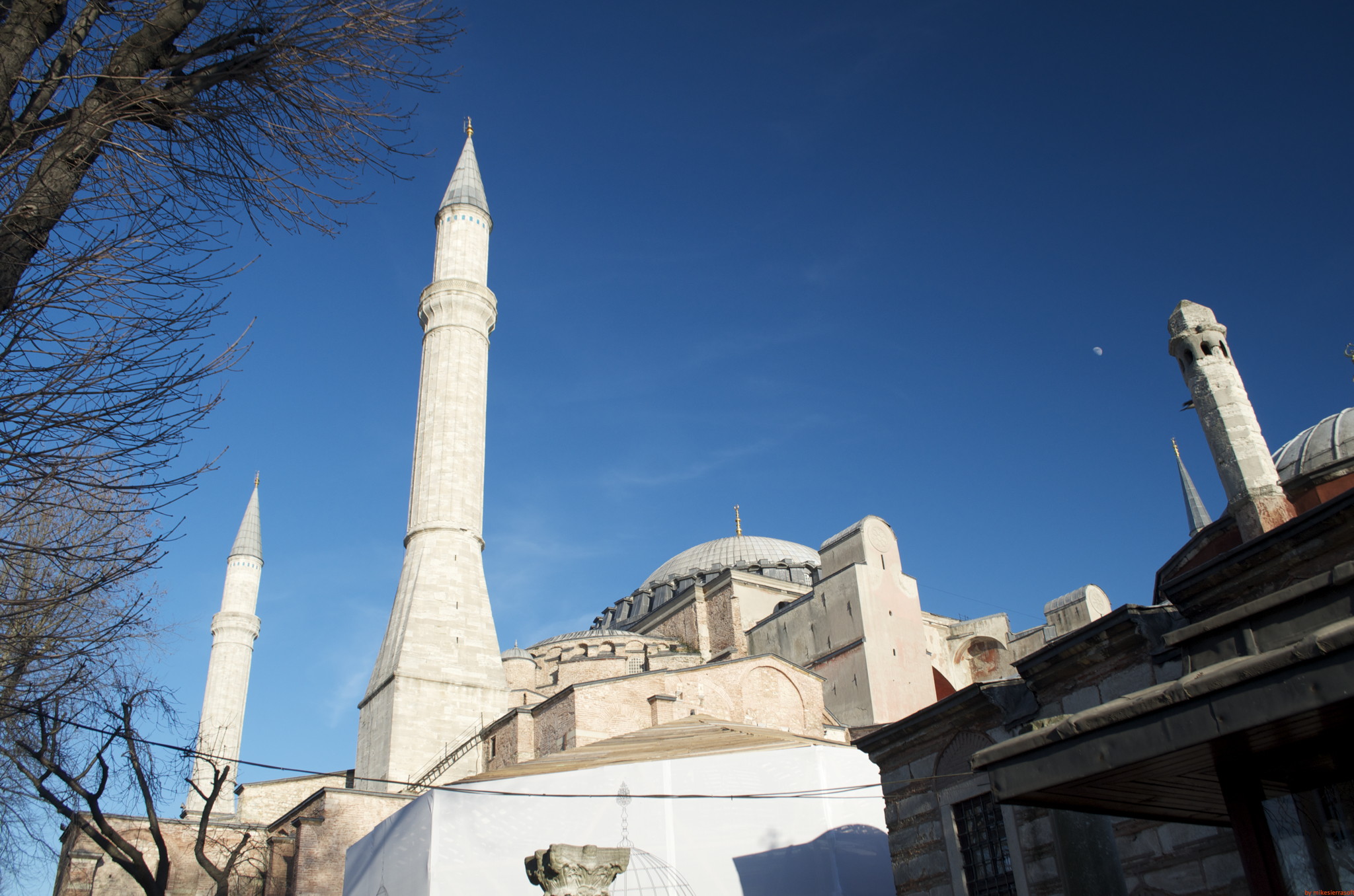
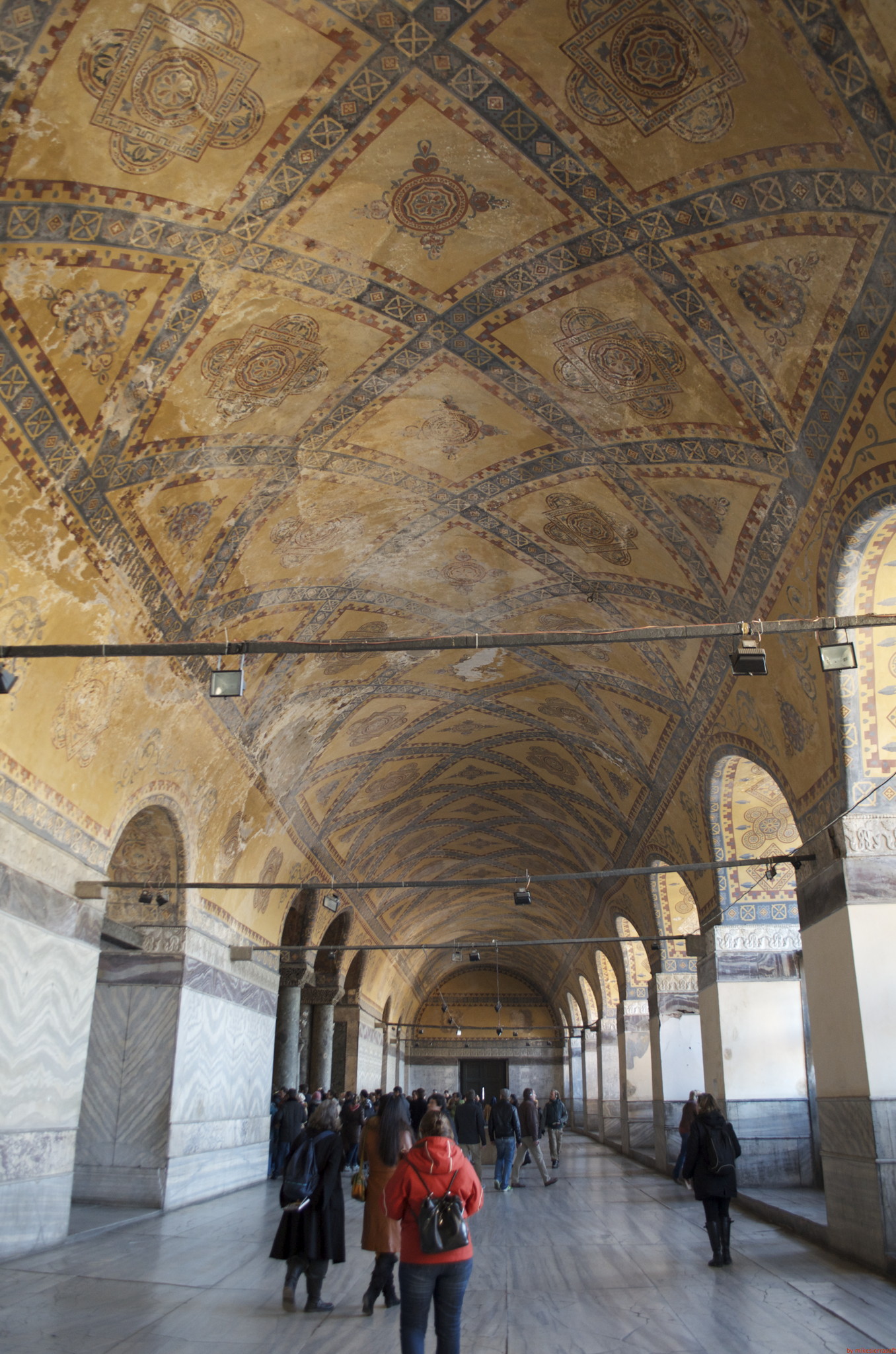
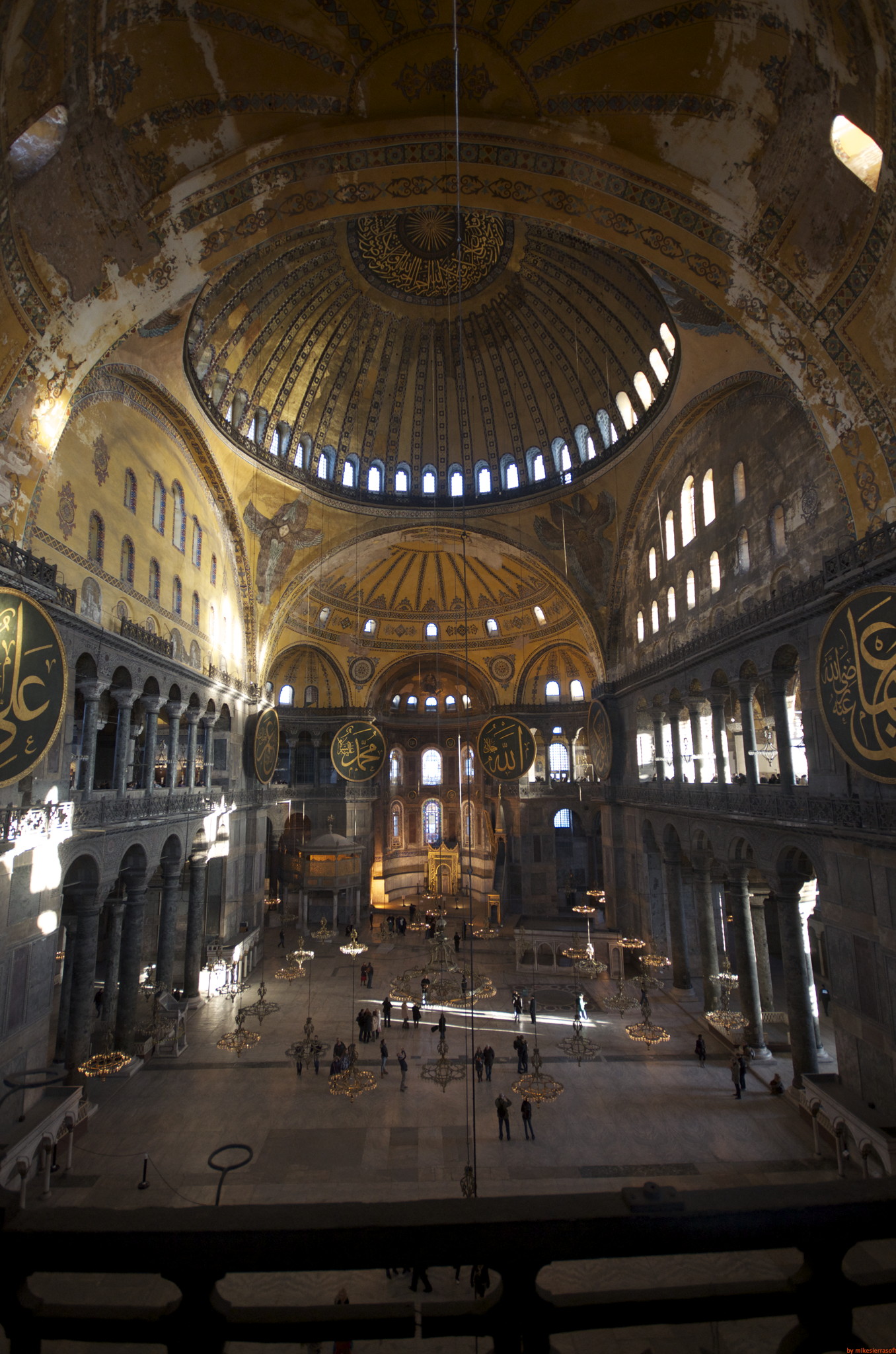
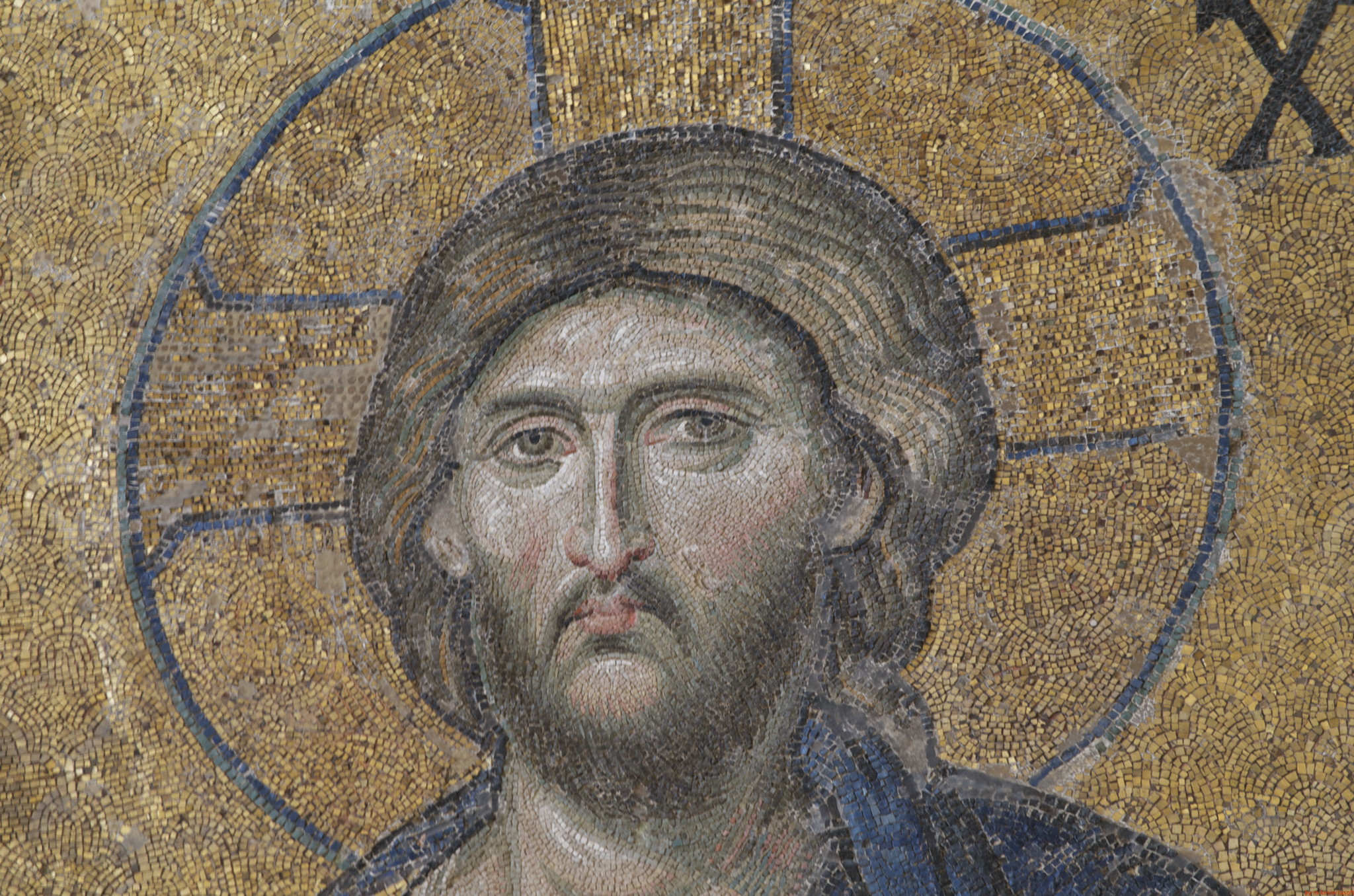
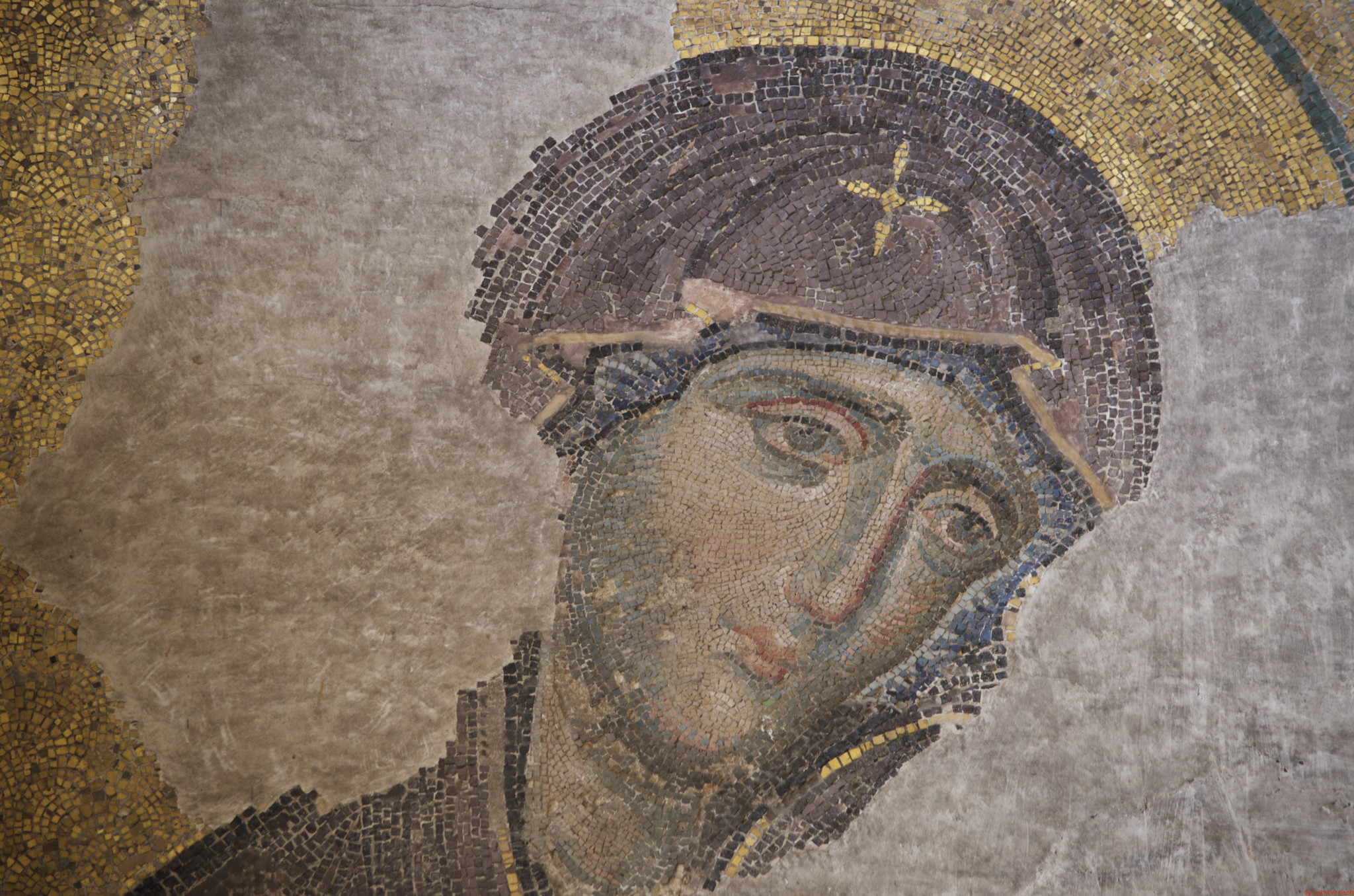
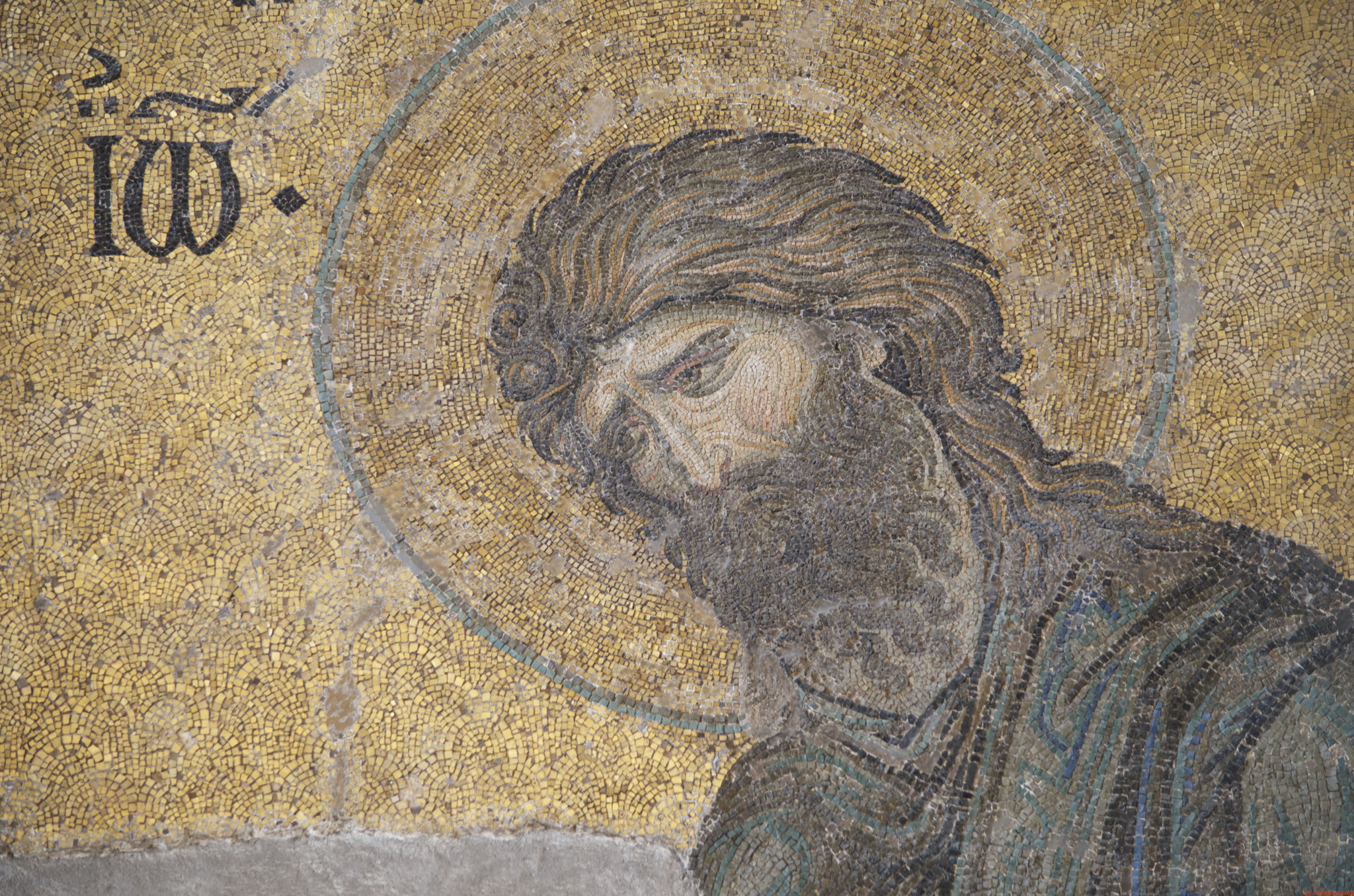
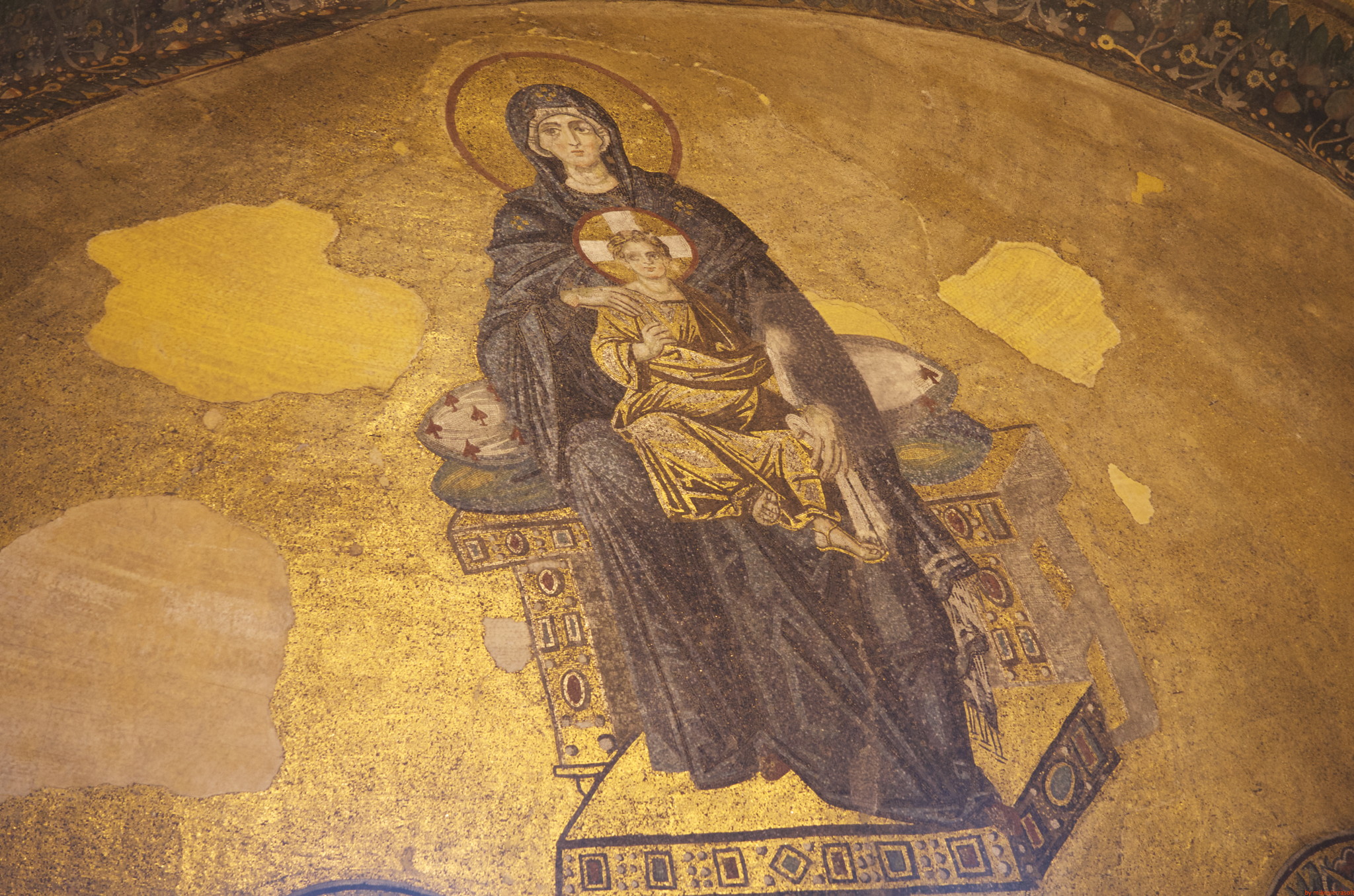
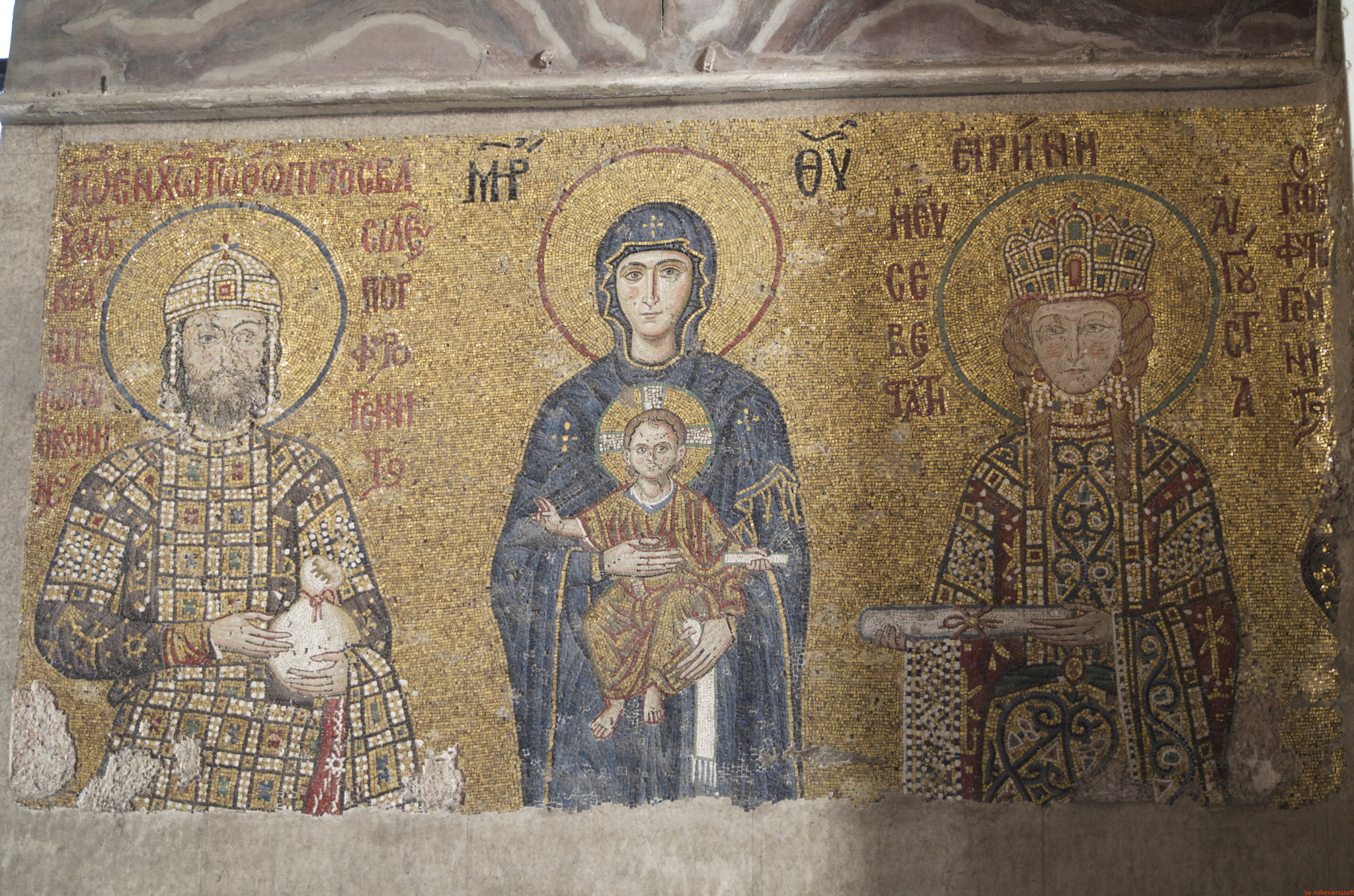
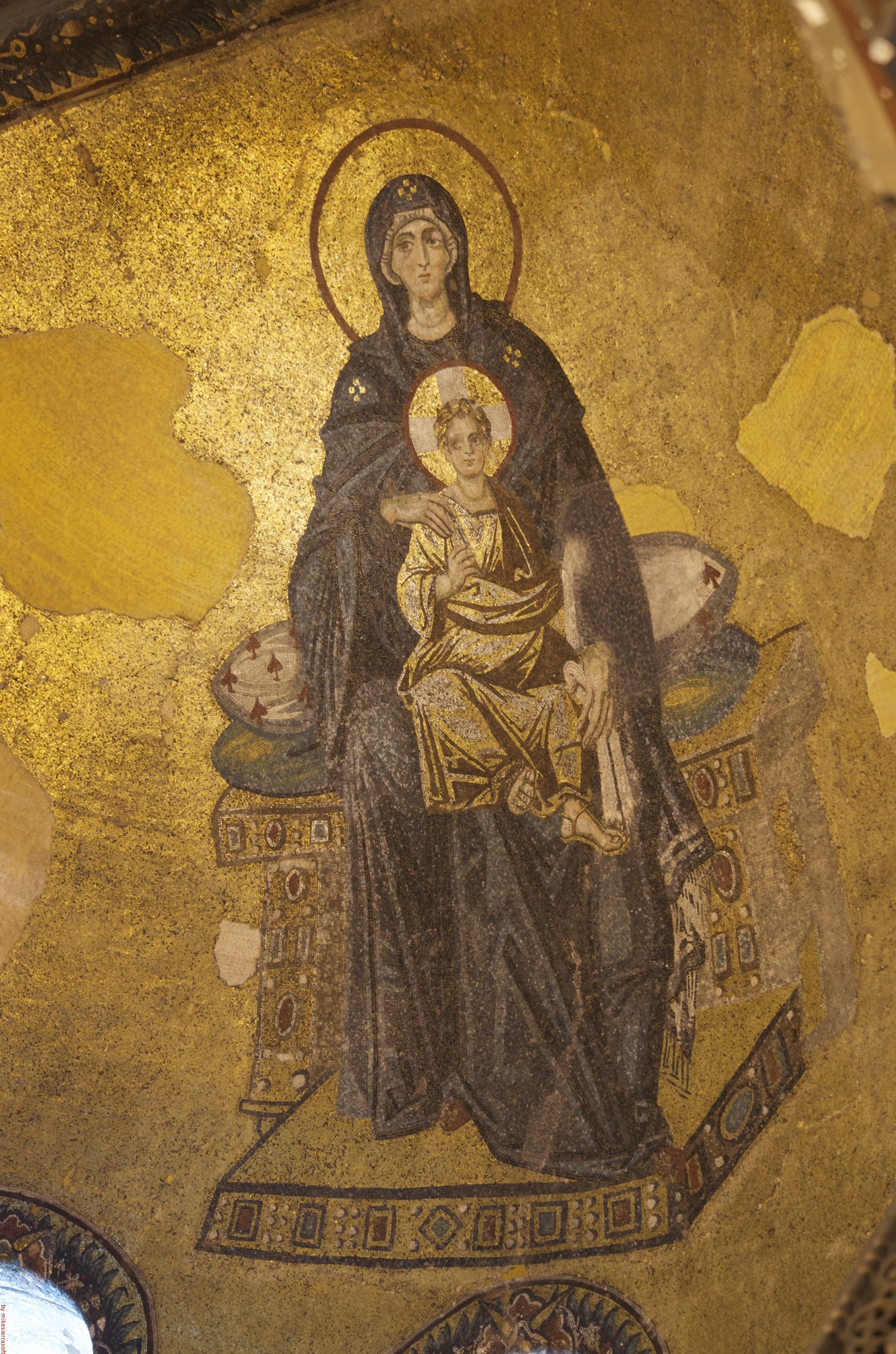
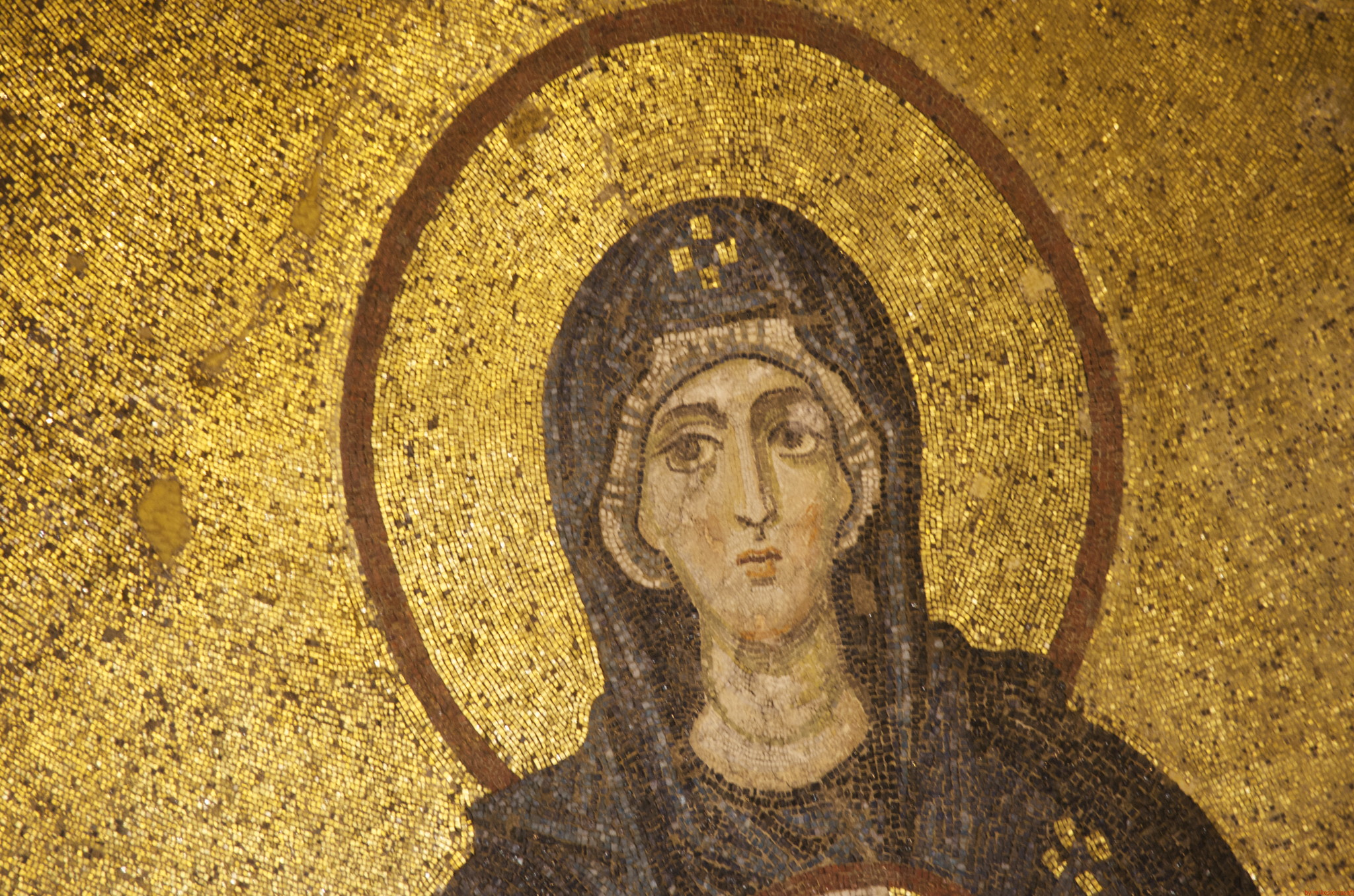
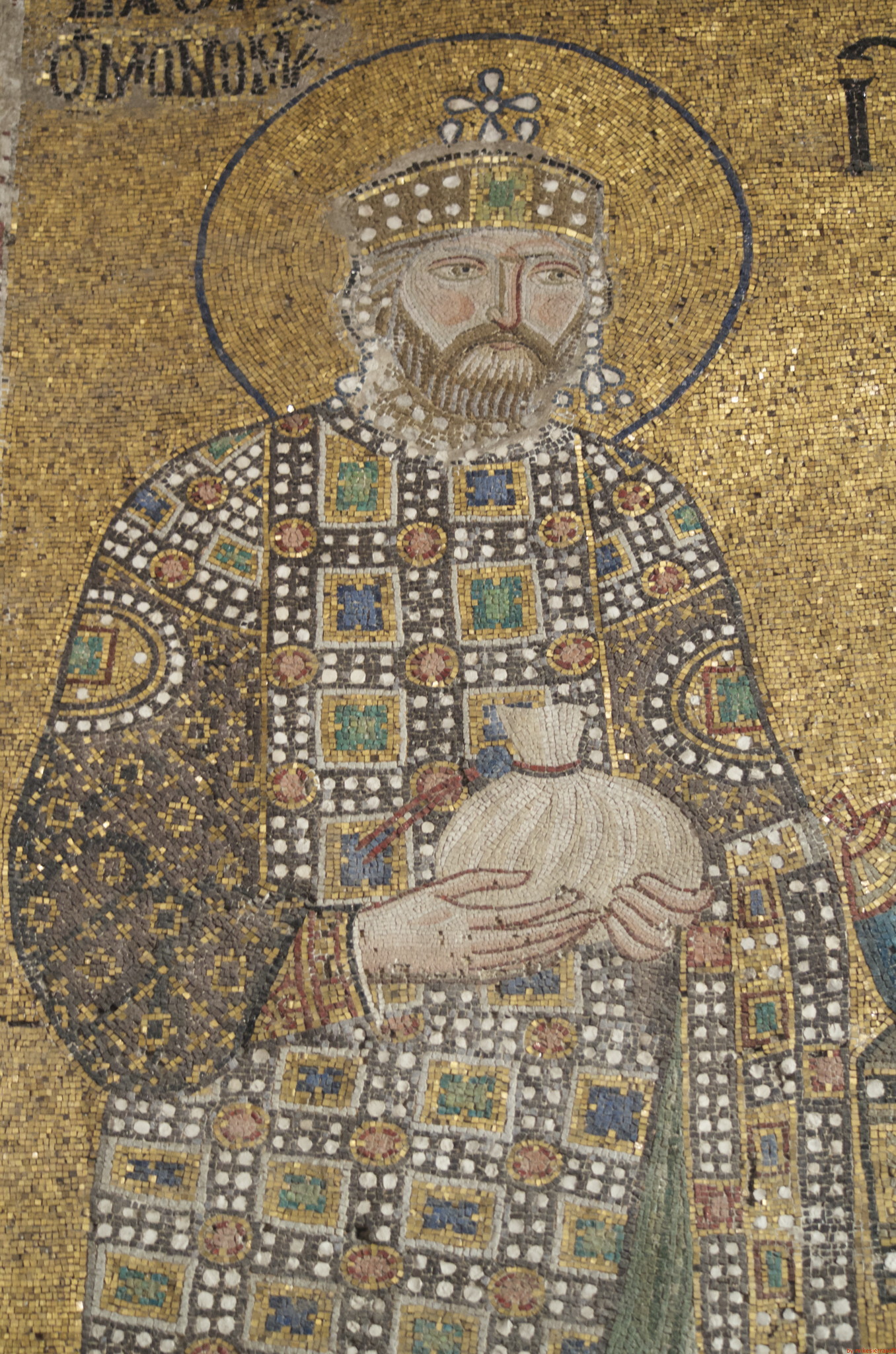
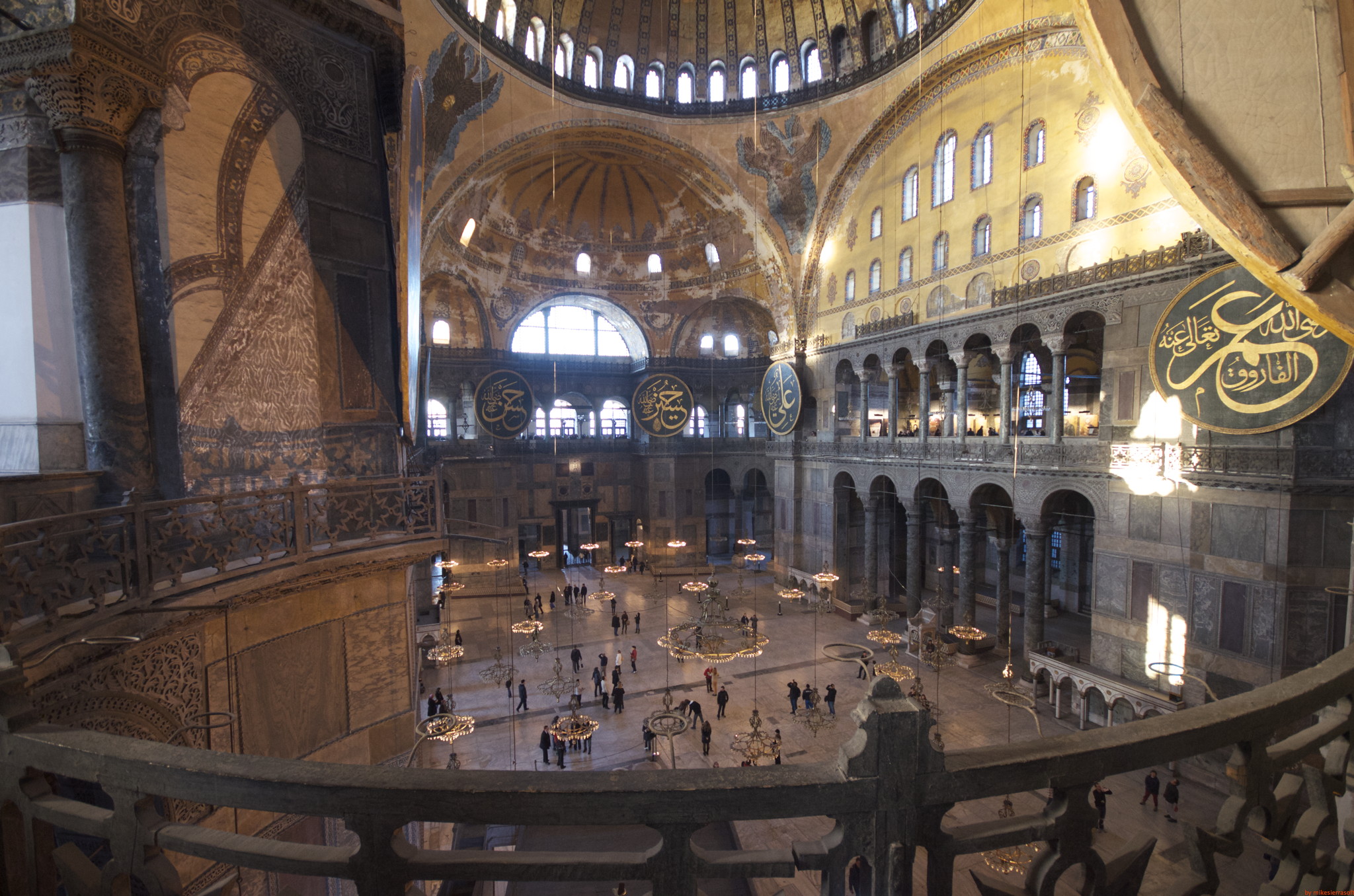
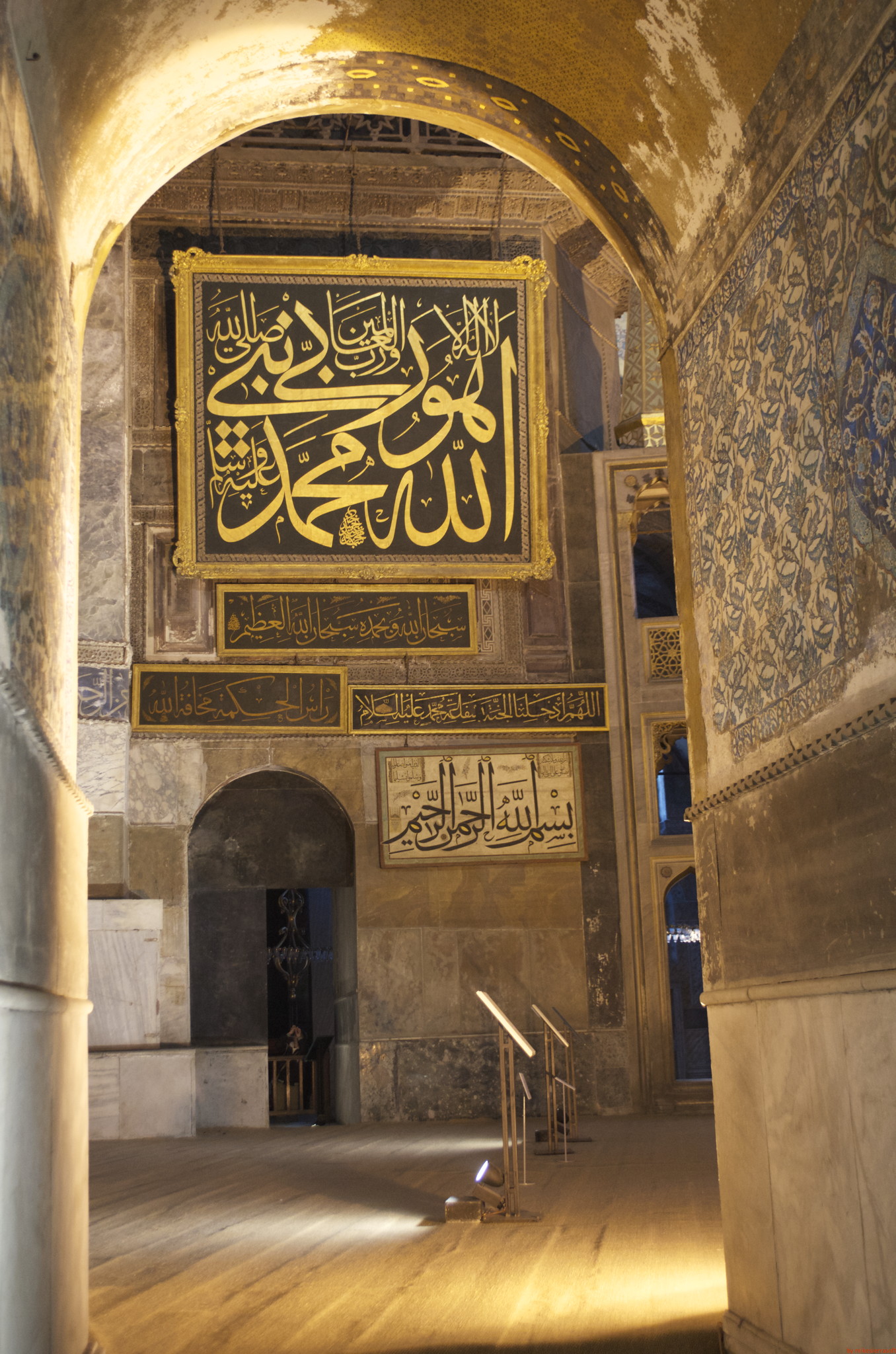
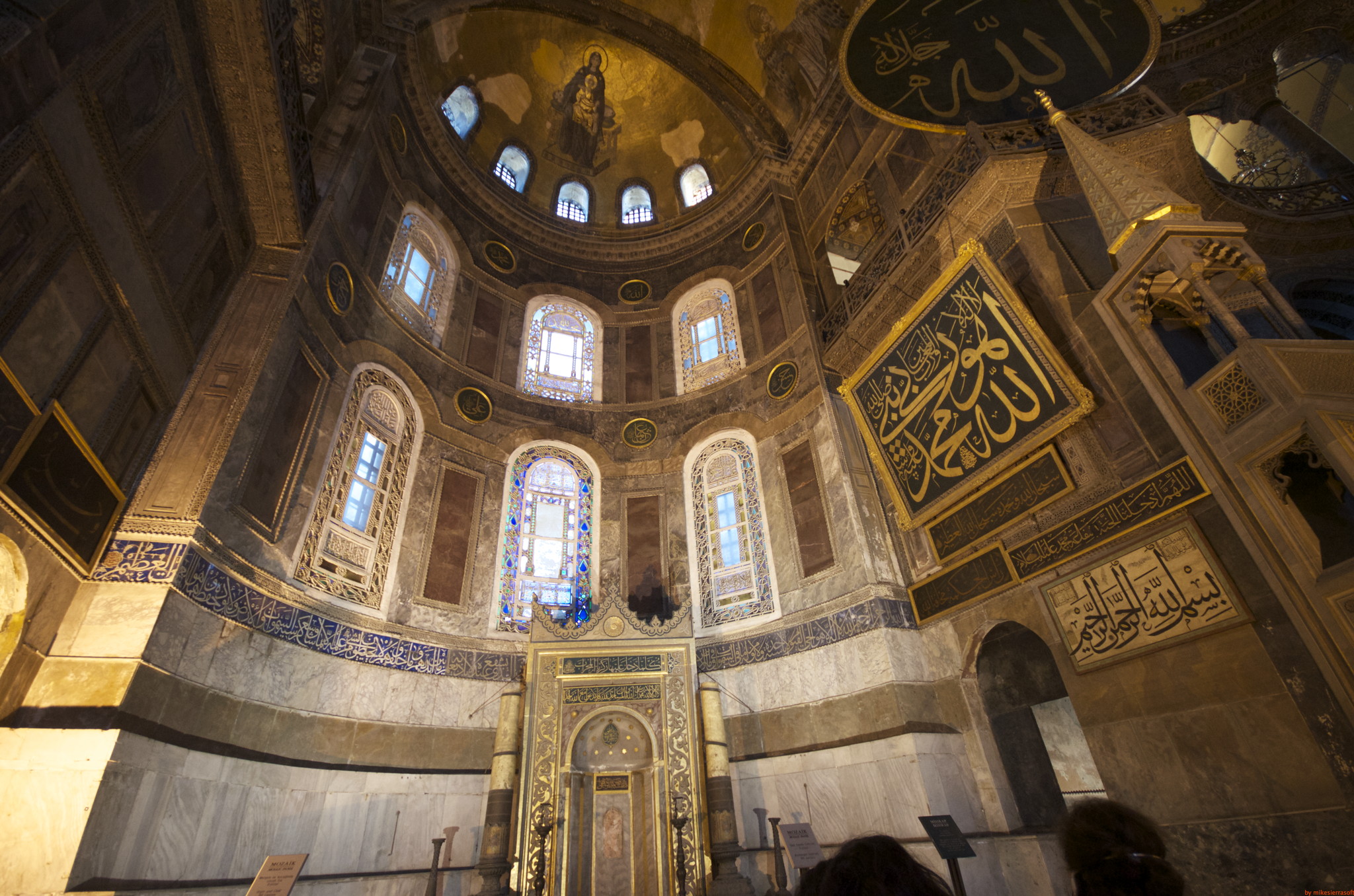
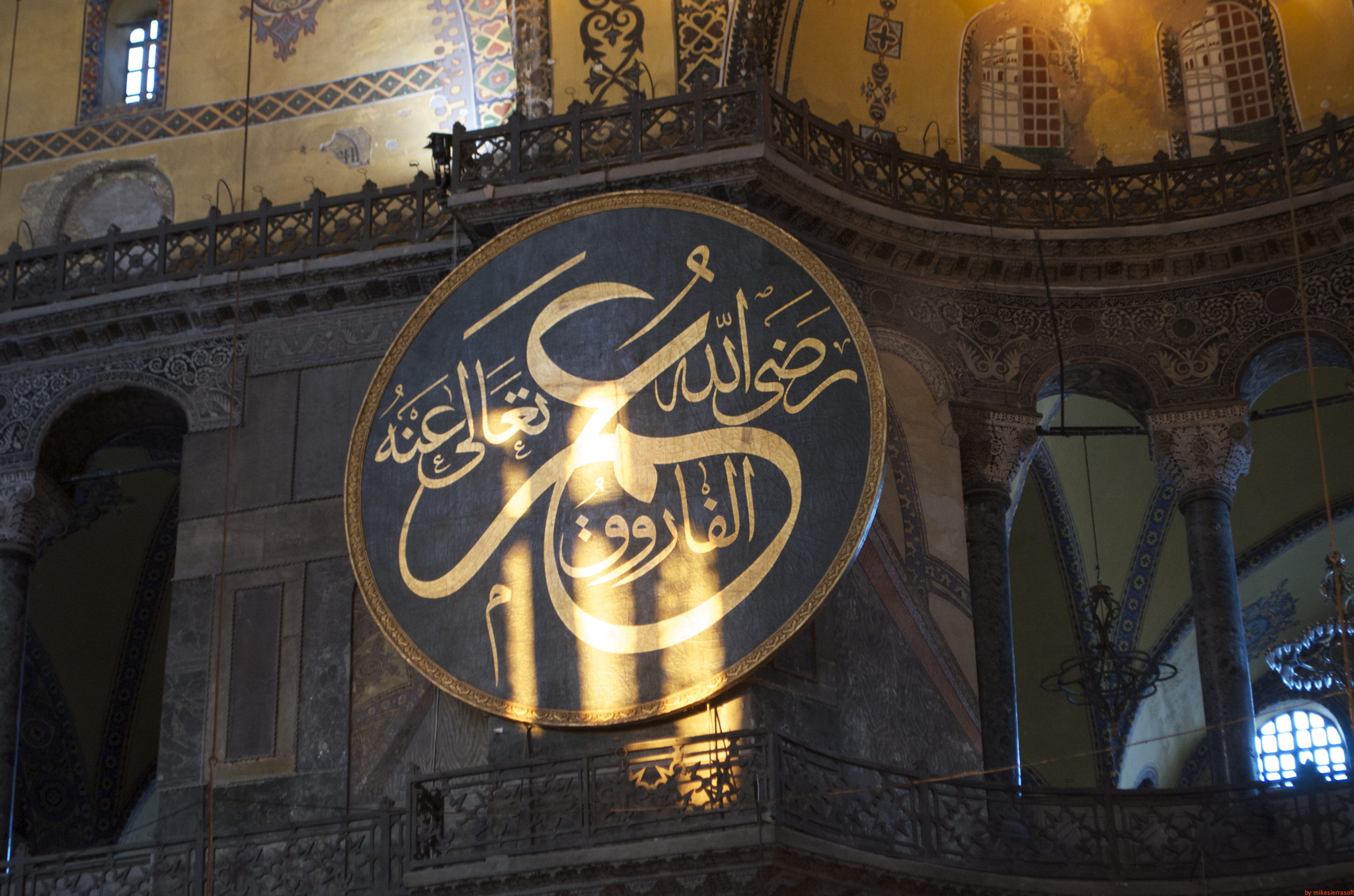
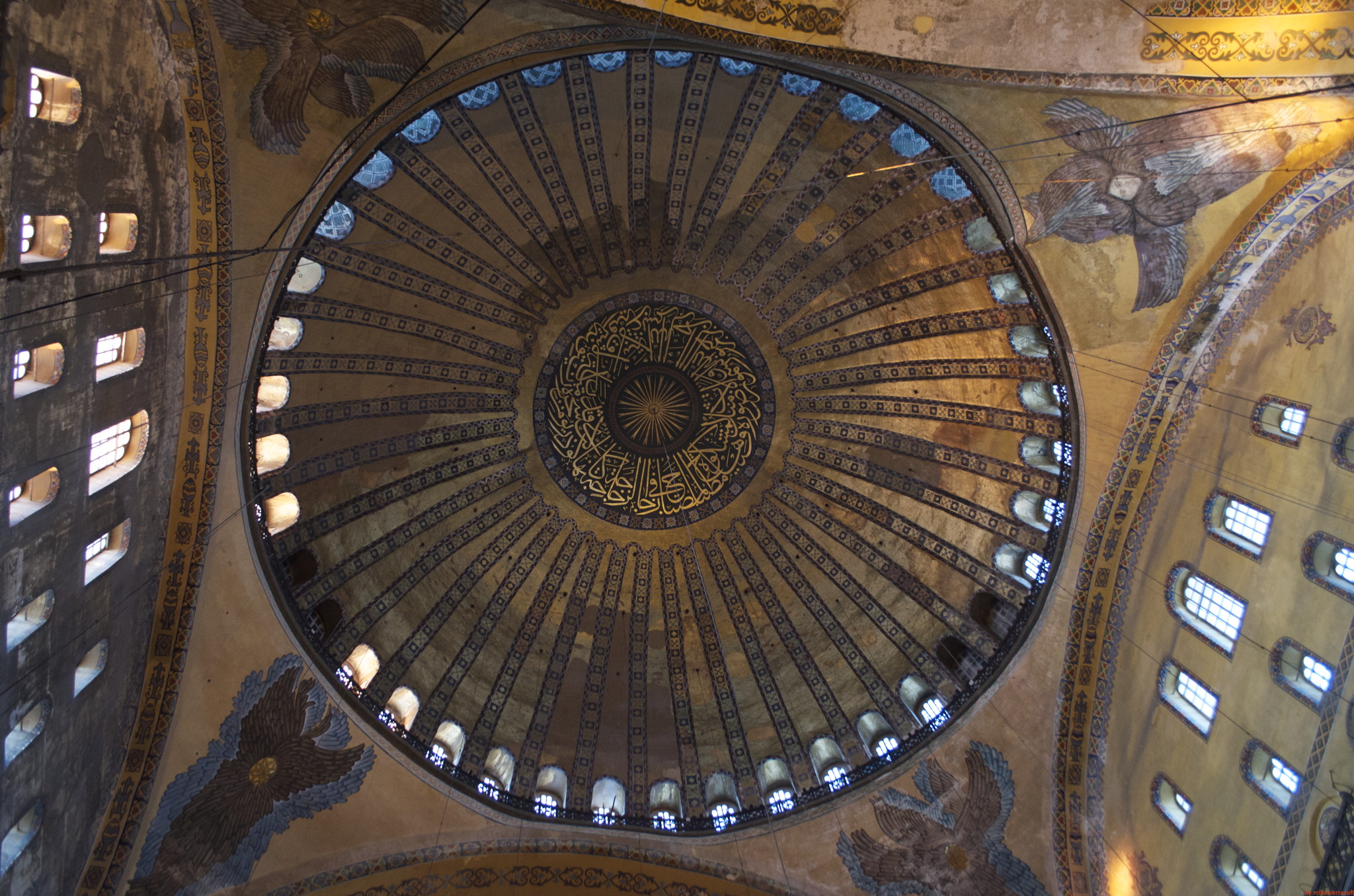
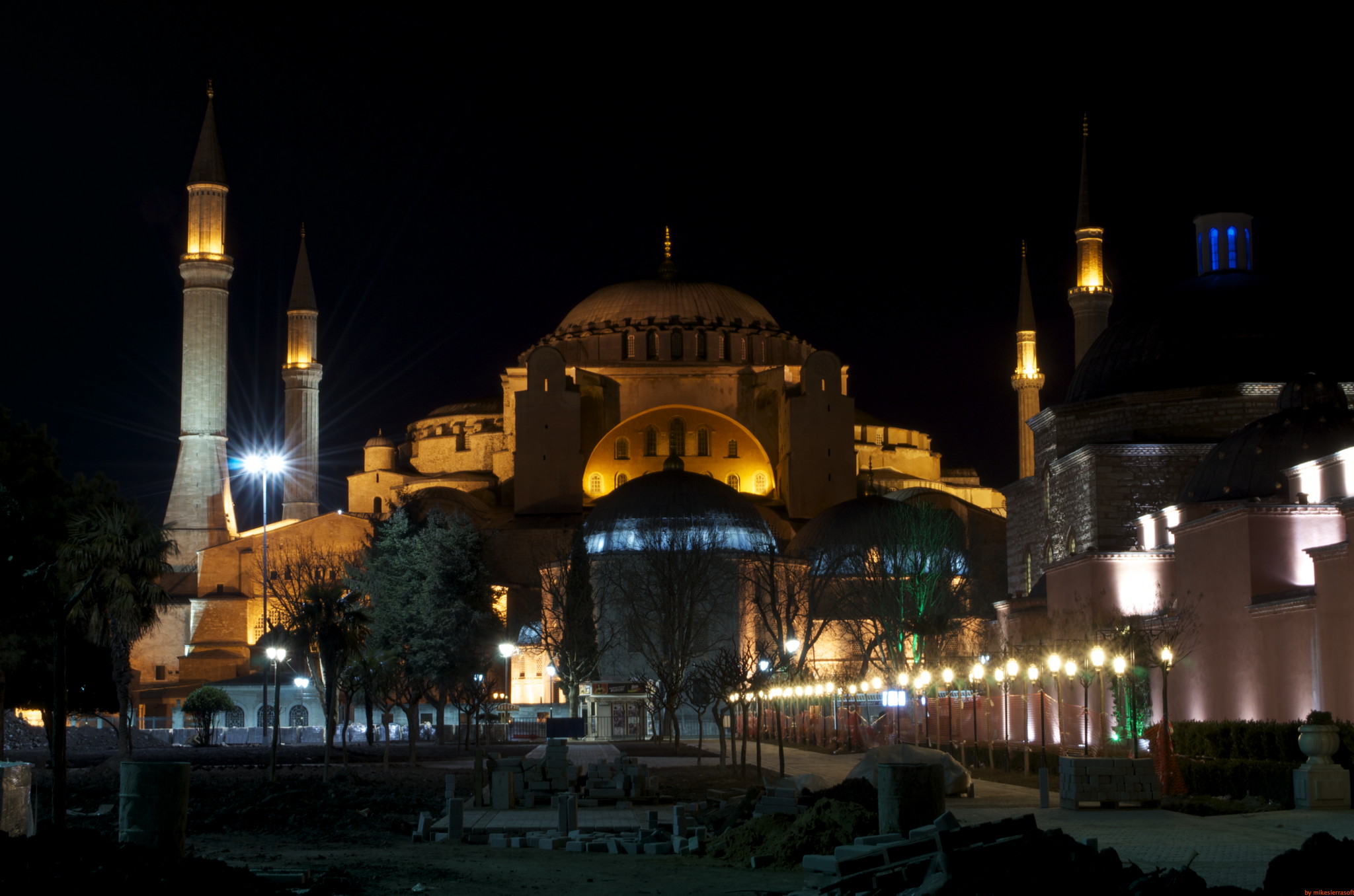
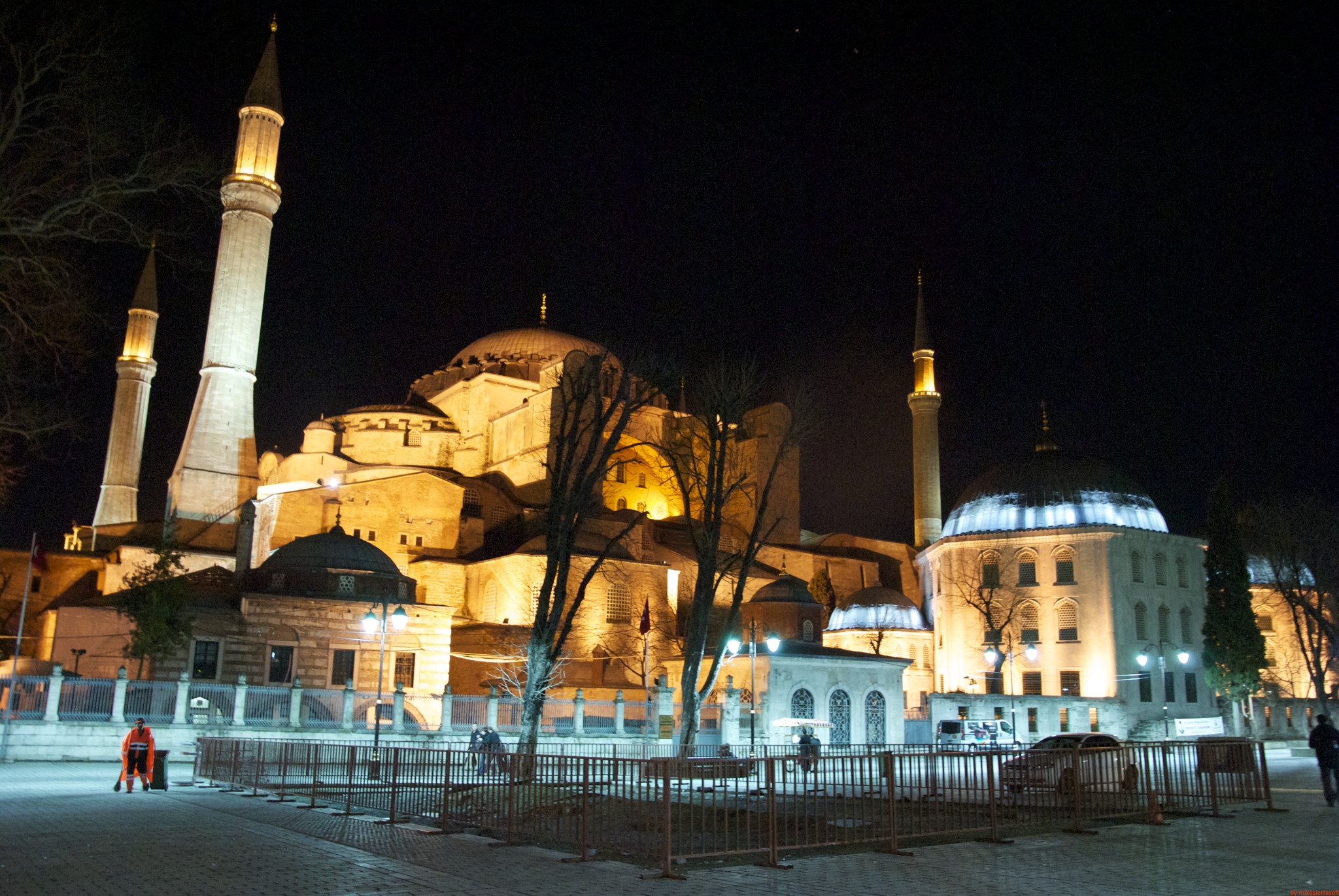
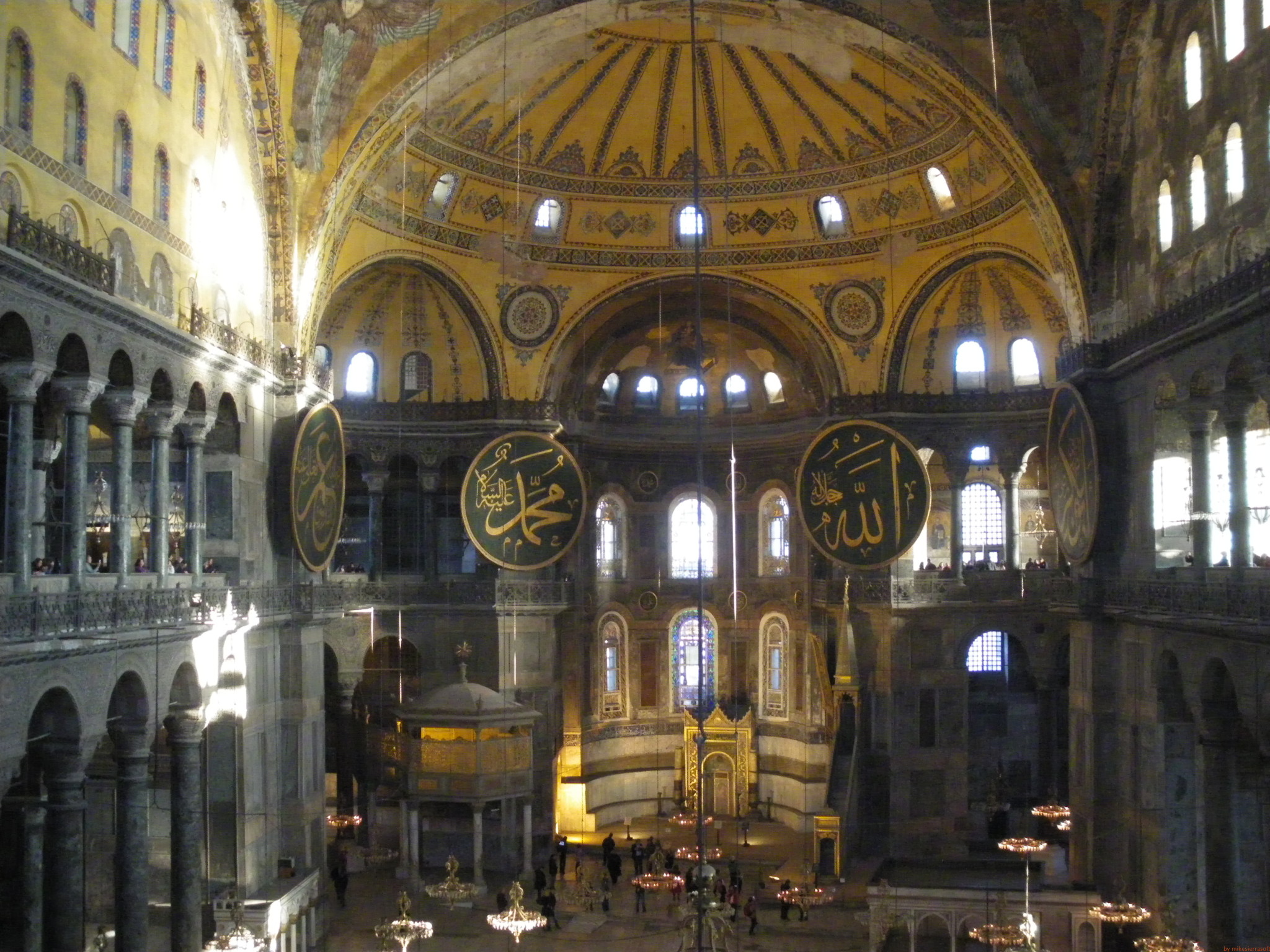
Over the years were added several mausoleums side. Inside, some richly decorated side aisles ( which are inspired the Basilica ofSan Marco in Venice ) result in the large room of the nave is dominated by gigantic dome, which rests on the plume and arches, which discharge their weight on four huge pillars. These pillars are built with dressed stones, bound together by melted lead, while the vaults, arches and walls are made of bricks. Destroyed and rebuilt several times has been the focus of real battles for delivering it to the function of the Christian church or Muslim mosque.
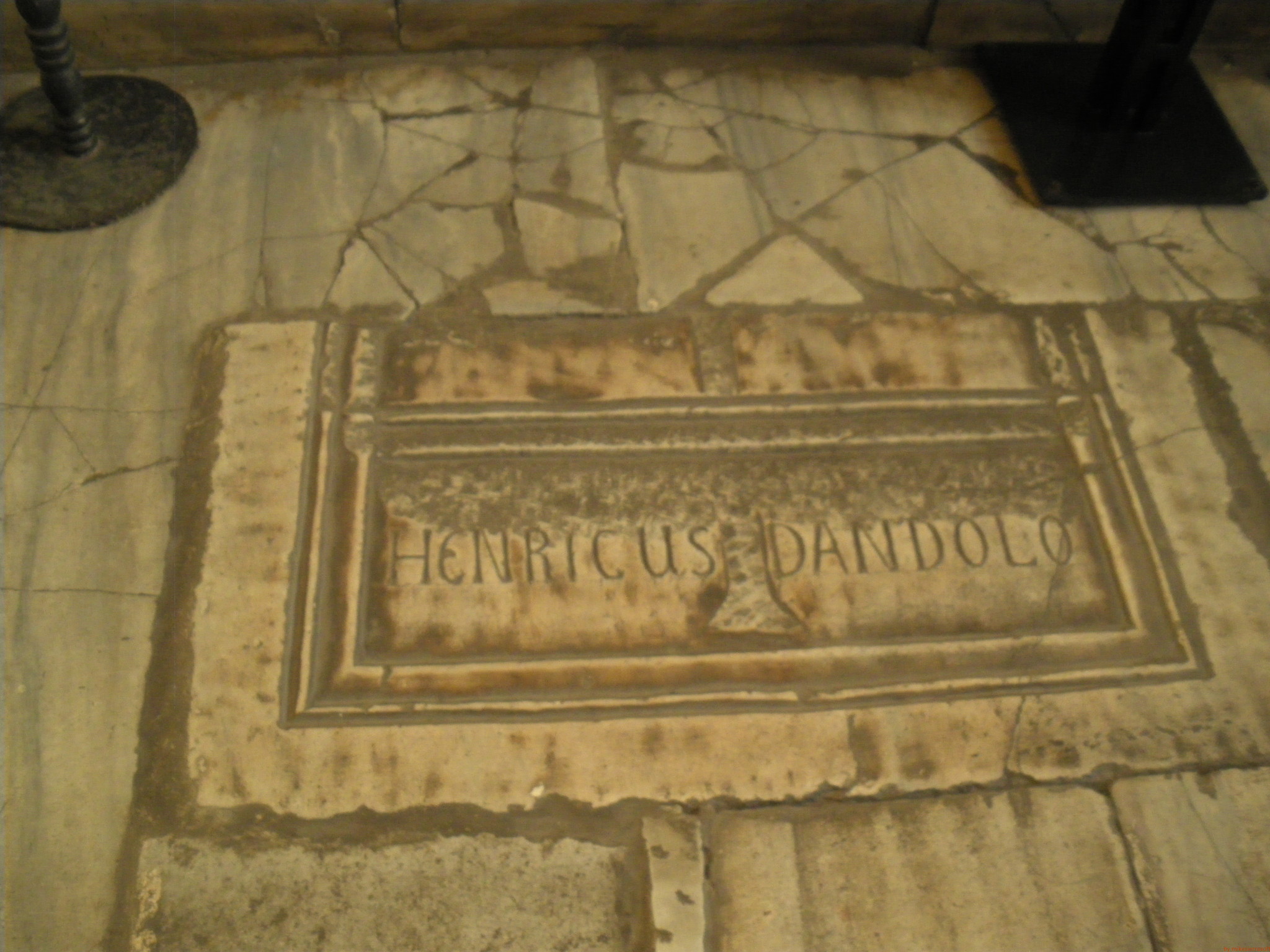
In 1935 , the first turkish president and founder of the Republic of Turkey, Mustafa Kemal Atatürk, transformed the building into a museum. The carpets were removed and the marble floor decorations appeared again for the first time in centuries, while the white plaster covering many of the mosaics was removed.
Today, the use of the complex as a place of worship ( mosque or church) is strictly prohibited. the turkish government has allowed the allocation of a small room of the museum complex to be used as a prayer room for anyone who wants it

